
Your Brain on Music: Why Learning an Instrument Is the Smartest Thing You Can Do
Science has finally caught up with what musicians have always known. Here’s what the research says – and how LorraineMusic.ai puts it to work for you.
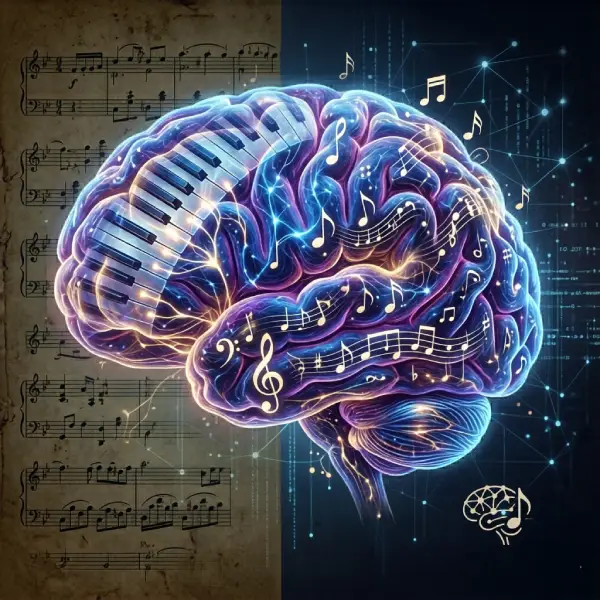
When Joseph Haydn died in 1809, thieves stole his skull. They believed, in the spirit of 19th-century phrenology, that his musical genius would be physically inscribed on the bone. They were wrong about that – but not entirely wrong about the idea. Music does leave its mark on the brain. Not on your skull, but deep inside it, reshaping neural architecture in ways that scientists are only now beginning to fully map.
The latest evidence is striking. A 2025 observational study of 10,000 cognitively sound adults over 70 found that regular listeners to music had a 39% lower relative risk of cognitive decline. Not musicians – just listeners. Now imagine what deliberate, regular practice does.
For the millions of adults who quietly wish they’d learned piano as a child – or the parents weighing whether music lessons are “worth it”, the science has an unambiguous answer: yes, and the sooner the better. The question is no longer whether to learn music. It’s how to do it in a way that actually works for real life.
That’s where LorraineMusic.ai enters the picture.
39%
Lower risk of cognitive decline in regular music listeners (2025)
21+
Years of music pedagogy powering the LorraineMusic.ai engine
7
The age before which early starters gain measurable brain advantages
2021
Meta-analysis linking music practice to reduced dementia risk